
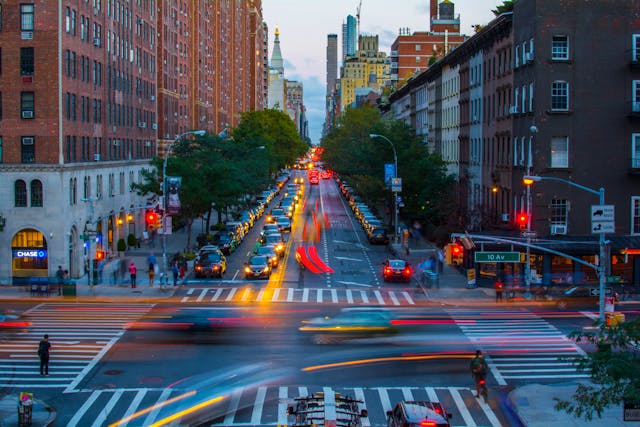
When drivers cannot find an available space, some may circle the same blocks repeatedly; this adds unnecessary traffic to already congested streets. Reservation systems address this by allowing drivers to secure a specific parking space before they arrive. At City Parking, we own over 200 parking locations within a tightly packed urban grid. Here are a few ways that reservation systems help reduce traffic in busy areas and parking garages:
Booking Pre-Arrival Spaces
A traffic-reduction benefit allows an individual to drive directly to parking garages for their reserved space. This helps to avoid searching, hesitation at intersections, and repeated passes through the same block. When a driver books a space in advance, the facility receives confirmed data, and the driver receives access to a reserved parking spot. That transaction may remove the variable behavior for localized congestion. With each pre-booked arrival, it helps reduce traffic congestion and circling the same block.
Through online platforms, users can search for parking near a specific address, filter by vehicle type or time, and view availability on a map. When drivers arrive with a confirmed parking space, they no longer need to circulate through surrounding streets. Traffic flow can become more predictable; vehicles move directly to their destinations rather than causing congestion.
Scheduling Arrival Timing
Reservation systems also help reduce congestion by scheduling vehicle arrivals more evenly throughout the day. Traditional parking operates on a first-come, first-served basis; this can create spikes in demand at peak hours.Reservation platforms allow users to select parking durations in advance, often in specific time increments.
Some facilities enable users to reserve spaces by hour, day, or month, with time slots available in 15-minute intervals; this structured scheduling spreads demand across multiple time windows rather than concentrating it at a single point. When arrival times are staggered, fewer vehicles may attempt to access the same facility at the same time. This helps reduce bottlenecks at garage entrances and decreases queuing on adjacent streets, allowing overall traffic circulation to improve in high-density areas.
Integrating Systems for Facility Throughput
Traffic congestion can be affected by street conditions and the parking facilities that serve vehicles. Slow entry and exit procedures sometimes cause backups that extend into surrounding roadways. Reservation systems, such as Parking Access and Revenue Control Systems (PARCS), automate payment and tracking processes. Some facilites emphasize that PARCS assist parking management because they track revenue, manage access, and generate operational data. Faster throughput helps reduce vehicles waiting to enter or leave a garage; this also helps with congestion on nearby streets. The data collected by these systems creates a historical record of usage patterns. Operators can use this data to determine optimal staffing levels and operational strategies, and it makes sure that the facilities handle peak demand without causing spillover traffic.
Centralizing Information With Decision Friction
Other methods to reduce congestion involve accessible parking information. Without reliable data, drivers may make last-minute decisions that lead to inefficient routing. Reservation systems centralize information about distance and availability; this allows drivers to make informed decisions before they begin their trip. Users can view details such as nearby amenities for each parking option. This level of detail helps prevent drivers from diverting mid-route to search for alternative parking. Traffic patterns become more stable because drivers follow direct routes and make decisions in advance.
Centralized systems also support online payments and account management; it helps eliminate the need for on-site payment delays. Monthly customers can manage accounts, update payment information, and access loyalty programs through online portals. By reducing on-site interactions, these systems further streamline vehicle movement within parking facilities and surrounding areas.
Using Parking Garages
Reservation systems reduce traffic in busy areas by transforming parking into a data-driven process. By eliminating search-based driving, distributing arrival times, and centralizing information, these systems address multiple sources of congestion at the same time. As cities continue to manage high vehicle volumes, reservation-based parking systems provide a solution to reduce traffic and improve overall transportation. At City Parking, our team utilizes reservation management, PARCS integration, and network-scale operations to help facilitate a more streamlined parking experience and reduce traffic congestion. Explore our website or contact our team today to learn more about our parking reservations and loyalty programs.